Why Interconnected Alarms Matter More Than You Think:
When One Alarm Just Isn’t Enough.
It’s 2:35 am and everyone has been fast asleep for hours. Before bed, you lined up tomorrow’s to-do list, set out your favorite coffee mug and made sure your laptop was charging in the downstairs office. Productive, prepared and winning at adulthood.
But … your laptop charger cord has seen better days. It’s bent near the base and wrapped in a little electrical tape. It technically still works. Until tonight.
Within seconds, a small spark catches that annoying tax form sitting on your desk. Flames begin to flicker. Smoke starts to build. And the smoke alarm in that room does exactly what it’s supposed to do — it sounds. Here’s the catch. You’re upstairs in bed — door closed, fan humming, maybe a white noise machine is doing its thing — so you don’t hear it right away.
Now imagine a different scenario.
The exact moment your office alarm senses smoke, every alarm in your home starts going off — together. They all start blaring, from the upstairs bedrooms down to the basement. It’s loud, urgent and it gets your attention immediately.
That’s the power of interconnected alarms. In a real emergency, it can mean the difference between getting everyone moving right away and losing precious time you didn’t even realize was slipping by.
What Exactly Are Interconnected Alarms?
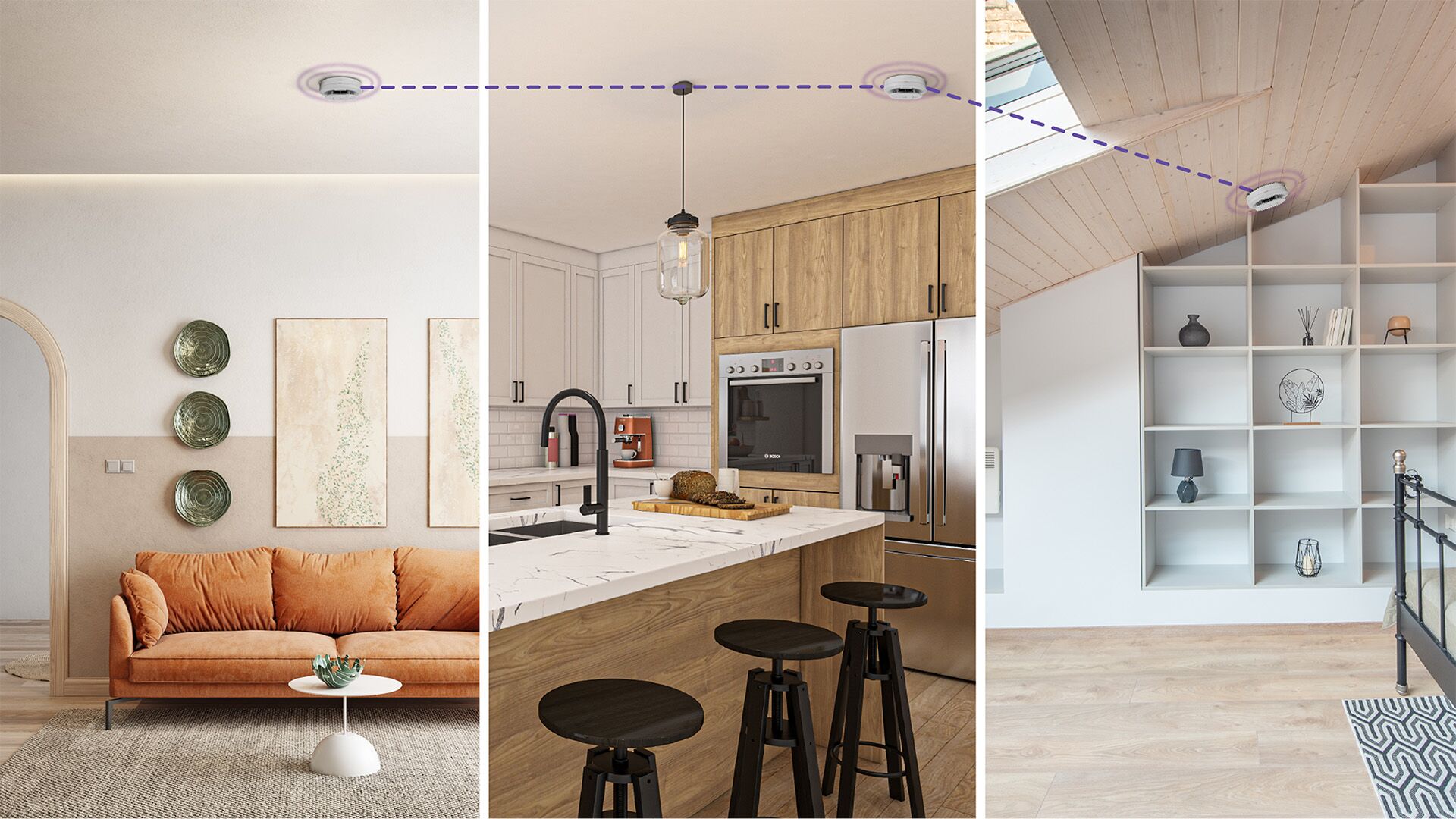
Interconnected alarms are exactly what they sound like: smoke alarms or combination smoke & carbon monoxide (CO) alarms that link together — so when one detects a problem, they all sound. Instead of each alarm working solo, they're kind of like a home safety super team. Here’s what’s happening behind the scenes:
- When one alarm detects smoke or CO, it sends out a signal.
Think of it like Batman’s signal lighting up the sky. One alarm spots trouble and immediately calls for backup. - Every other interconnected alarm receives that signal.
The rest of the team sees the signal and springs into action. No hesitation. No waiting to confirm. - All alarms sound at the same time, alerting your entire home.
t’s like the whole Justice League showing up at once — not just a single hero handling it alone, but the entire team responding together so everyone knows instantly that something’s wrong.
How Do I Get My Home’s Alarms to Connect?
So how do you actually make this whole “super team” thing happen in real life?
Interconnected alarms are made possible through hardwired alarms that physically connect to your home’s electrical wiring — and typically include a backup battery to keep the alarm working if the power goes out.
With interconnected alarms, the goal is for the whole house to immediately know when there’s an emergency. Because fires don’t politely stay in one room. And your alarm system shouldn’t either.
2 Big Reasons Interconnection Just Makes Sense
1. More Time to Get to Safety
Most home fires don’t start in the room you’re hanging out in. They start in the basement near the water heater. Or in the kitchen when a late-night snack turns into “Wait … did I turn that off?” Or in a quiet office where that tired, old charger finally calls it quits.
It’s not just about making more noise. It’s about buying you and your family more time to get out safely — especially when you’re groggy, disoriented and trying to figure out what’s happening in the middle of the night. And in an emergency, even a little more time can mean a lot.
2. Meets Code Requirements
Interconnection isn’t some extra “nice to have” anymore — in a lot of places, it’s just the standard.
Today’s building codes require interconnected smoke alarms in many new homes and major renovation projects. It’s baked into how homes are built and updated now.
So whether you’re remodeling or finally replacing those old yellowing alarms, going interconnected can help bring your home up to current code requirements — and give you a serious safety upgrade at the same time. It’s one of those moves that checks the box to make your home a lot safer.

Make Sure Your Alarms are on the Same Team
So how do you actually make this whole “super team” thing happen in real life?
Something most people don’t realize is that not all alarms can connect to each other. Even within the same brand, compatibility can vary depending on model type and technology. Before mixing alarms, save yourself a “You’ve gotta be kidding me!” moment and make sure to confirm:
- Which specific models can interconnect together
- How many devices can be connected in one network
- Whether smoke, CO and combo alarms can all link
Taking a few minutes to verify compatibility upfront prevents frustration later — so you can avoid that specific kind of rage that comes from getting everything installed and realizing they won’t connect. Before you click “add to cart” or grab a stack of alarms from the shelf, reference the User Guides, Compatibility Guide and Applications & Design Guide to get it right the first time.
When Every Second Counts, Every Alarm Should Too
Safety shouldn’t depend on which room you’re in when things go sideways. That tiny spark on a cluttered desk can turn into heavy smoke way faster than you’d think — long before anyone upstairs smells a thing. And in the middle of the night, when you’re groggy, disoriented and trying to figure out what’s happening, seconds feel very real.
Interconnected alarms make all the difference. You wake up faster. You move sooner. And you get everyone out earlier.
That’s what interconnection really does. It helps give you more time when it matters most. Because sometimes, an extra minute is everything.

Related Products
Related Articles
Fire Safety Toolkit Essentials: How to Ensure Whole-Home Coverage
A complete fire safety toolkit goes beyond one alarm. Learn how smoke alarms, CO alarms, extinguishers and escape plans work together to protect your home.
Household Fire Hazards: Identify Risks and Help Protect Your Home
Fire safety is something most of us learned early, long before we owned homes or paid utility bills. Fire is hot. Matches aren’t toys. And if you’re ever on fire, you stop, drop and roll.
How To Choose the Best Smoke Alarm
Looking for the best smoke detectors? Learn how to choose from the types of smoke detectors, learn about types of fire and smoke detectors types, then choose the best smoke detector type for you. fire alarms, smoke alarm, smoke detector types