A Simple Guide to Choosing a Fire Extinguisher
Because seeing all the options can get overwhelming fast.
You’re at the hardware store, staring at a wall of red canisters with letters, numbers, sizes and ratings you really don’t understand. Suddenly, a quick shopping trip feels way more complicated than you thought it would be.
You’re definitely not alone. Most people don’t think about fire extinguishers until they realize they probably should have one. The good news? Kidde is here to help demystify the process. And once you break it down, choosing the right one is actually pretty manageable.
Start With What You Might Be Putting Out
Once you understand what each class is designed for, choosing the right extinguisher becomes a whole lot easier.
Get the Right Ones for the Right Spaces
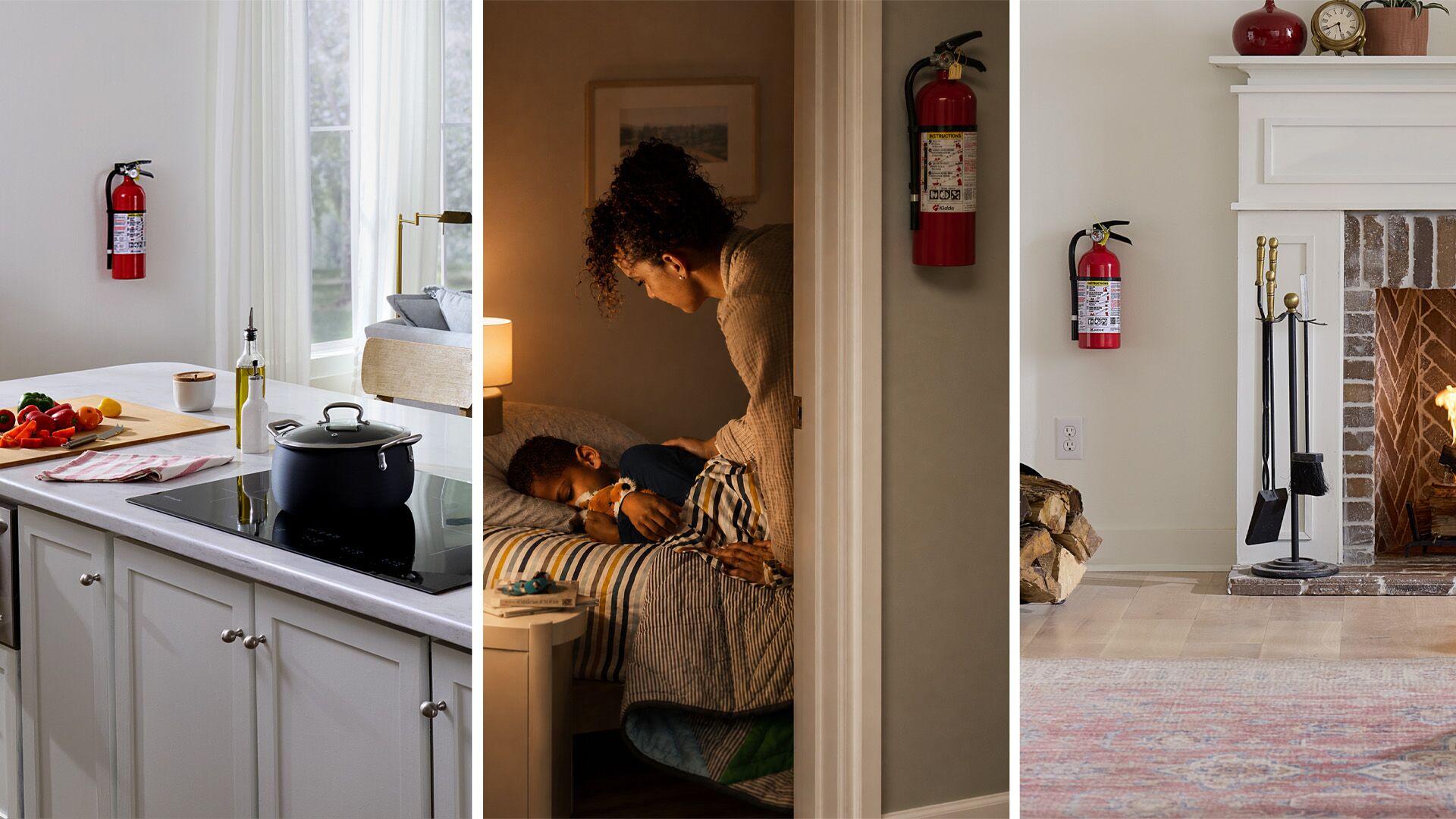
To figure out which extinguishers you need, you can also start by thinking about where fires are most likely to happen — and where you’d want quick access if they did. The NFPA recommends having fire extinguishers on every level of your home (specifically near exits), along with in the kitchen and garage.1
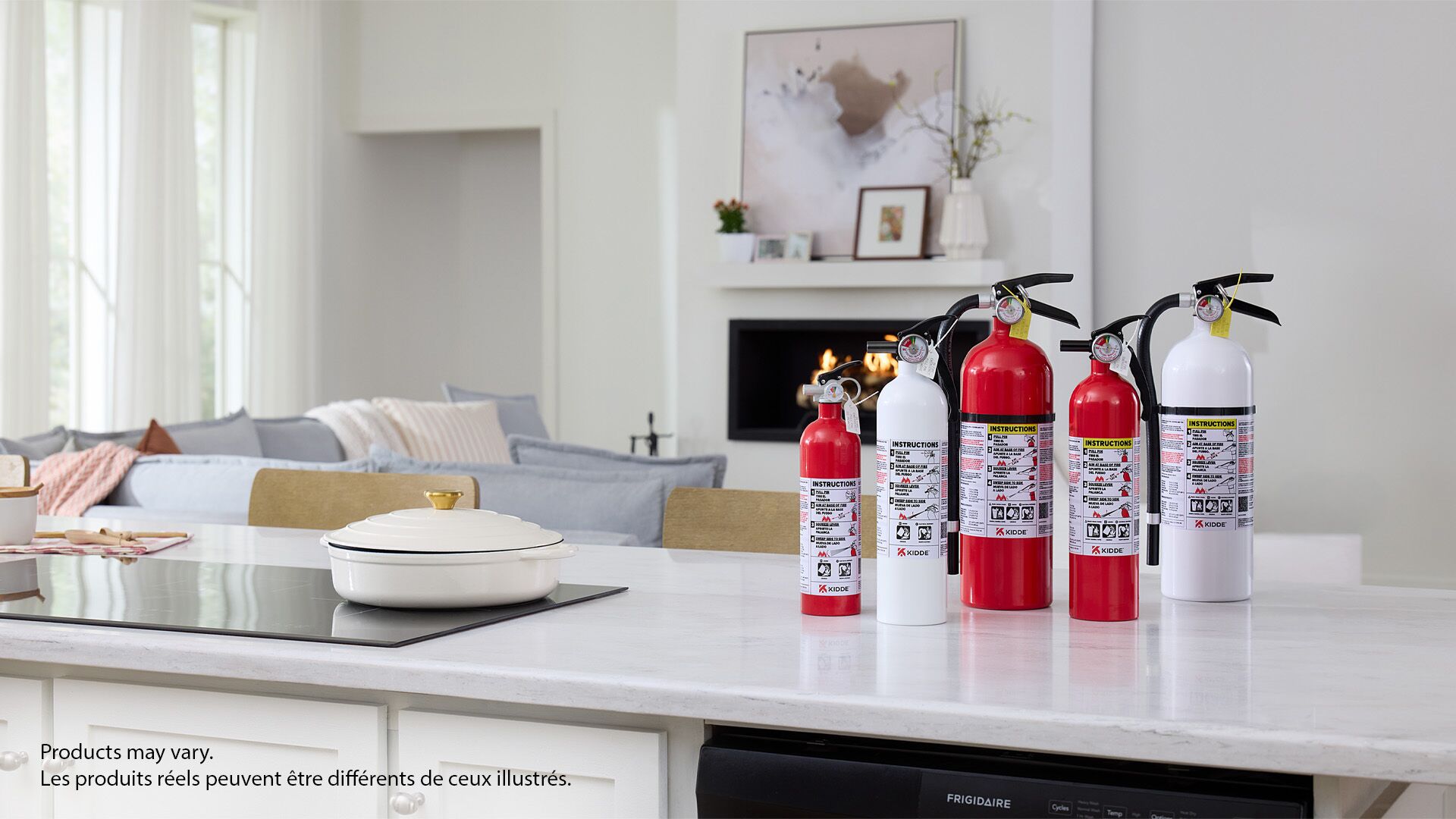
Here are the main extinguisher categories that can help keep you covered at home, on the road and out on the water.
Basic Home
These all-purpose combination ABC extinguishers are a smart choice for most homes because they’re designed to handle most common household fires.
Living Area
For living rooms, dens, family rooms and other areas where people gather, quick access matters. They’re also great for keeping near fireplaces.
Kitchen
Cooking is the leading cause of home fires,1 so having a kitchen extinguisher is a smart move. Keep it somewhere that’s easy to grab but make sure you won’t have to reach over flames to get it.
Garage
Tools, fuel, batteries and equipment can create added fire risk. Keeping an extinguisher here helps you stay ready for projects, storage areas and everyday garage use.
Auto
Compact extinguishers for your car, truck or RV are easy to store and can be helpful for roadside emergencies or vehicle-related fires.
Marine
Boats require extinguishers designed for marine environments. Choose marine-rated options built to handle life on the water and keep them accessible onboard.
Placement is Half the Battle
The best extinguisher in the world won’t help much if it’s tucked in a closet behind board games and wrapping paper. A good rule of thumb is to place it where you can grab it fast — not where it’s easy to forget about. Because if you ever need it, you definitely don’t want to waste time searching.
- Store them in easily accessible places
- Keep one on every level of your home
- Place them along exit paths
- Make sure they’re easy to reach and not hidden
A Little Preparation Goes a Long Way
A fire extinguisher isn’t something you think about every day — until you really wish one was nearby. Choosing the right fit for your space matters but having a working extinguisher is better than having none at all. So place them where it counts, be ready if you ever need to use them — and feel good knowing you’ve done all you can to stay prepared.
Related Products
Related Articles
Household Fire Hazards: Identify Risks and Help Protect Your Home
Fire safety is something most of us learned early, long before we owned homes or paid utility bills. Fire is hot. Matches aren’t toys. And if you’re ever on fire, you stop, drop and roll.
How to Use a Fire Extinguisher
Learn the four-step PASS procedure recommended by the National Fire Protection Association for How to Use a Fire Extinguisher. how to use fire extinguisher